Aug 25, 2026
The Difference Between Tracking Projects and Controlling Delivery
Most project management tools assume that if you can see the work, you can manage it. But visibility and control are not the same thing. Knowing what's happening is not the same as knowing what to do next.
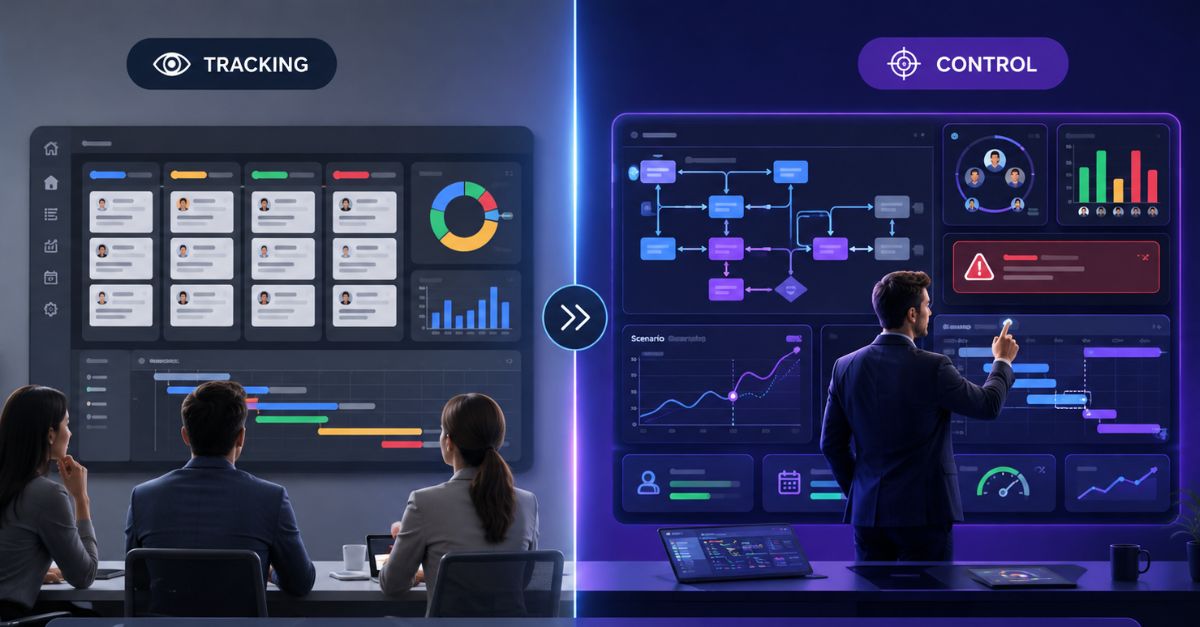
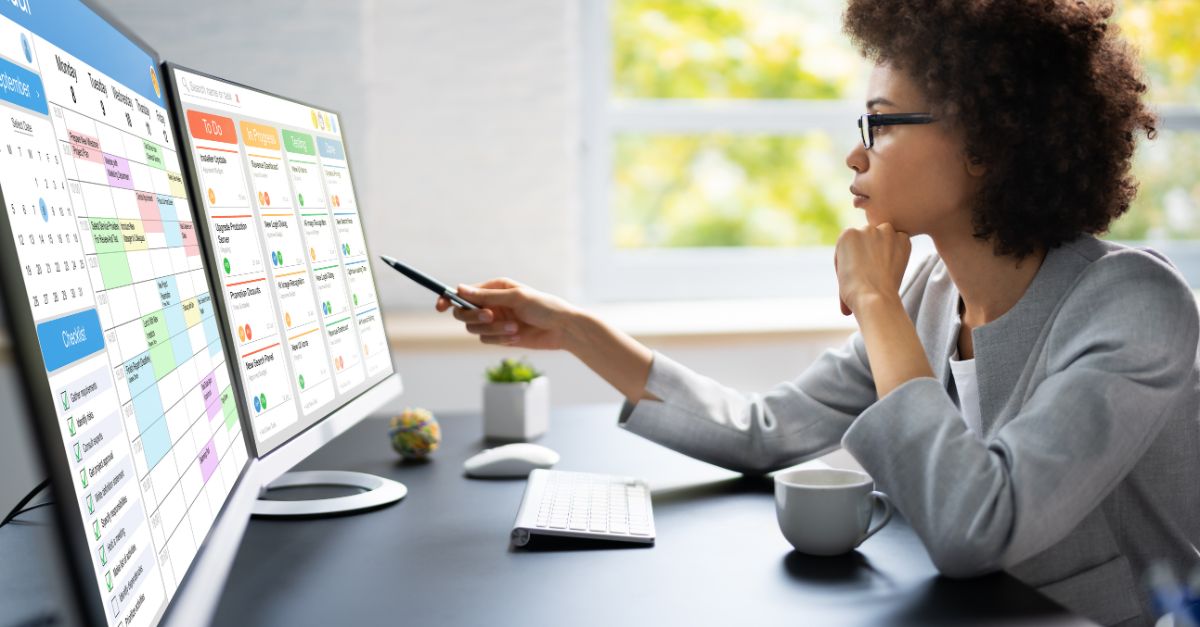
There's a version of project visibility that almost every team has. A dashboard that shows tasks. A status column that shows green, yellow, or red. A weekly update email that tells leadership what completed last week and what's planned for next week.
This is visibility. It is genuinely useful. And it is not enough.
The reason most project management implementations fall short isn't that teams can't see their work. It's that seeing the work doesn't automatically tell you what the work means, what's at risk, what's coming, or what to do about any of it. That requires something different. It requires control.
What Visibility Gets Right
Visibility tools solve a real problem: they move information out of individual heads and into a shared system. When project status lives in spreadsheets, email threads, and status meetings, it becomes siloed and quickly outdated. A task board, project timeline, and shared platform make the work clear in a way informal communication cannot.
That matters. Teams that have visibility into their work coordinate better, catch conflicts earlier, and spend less time in status meetings because status is always accessible. These are real gains, and they shouldn't be dismissed.
On its own, visibility looks backward. It shows what has happened and what is happening now, but it does not predict what comes next or help you take action.
Where Visibility Ends and Control Begins
Control is what happens after you can see the work.
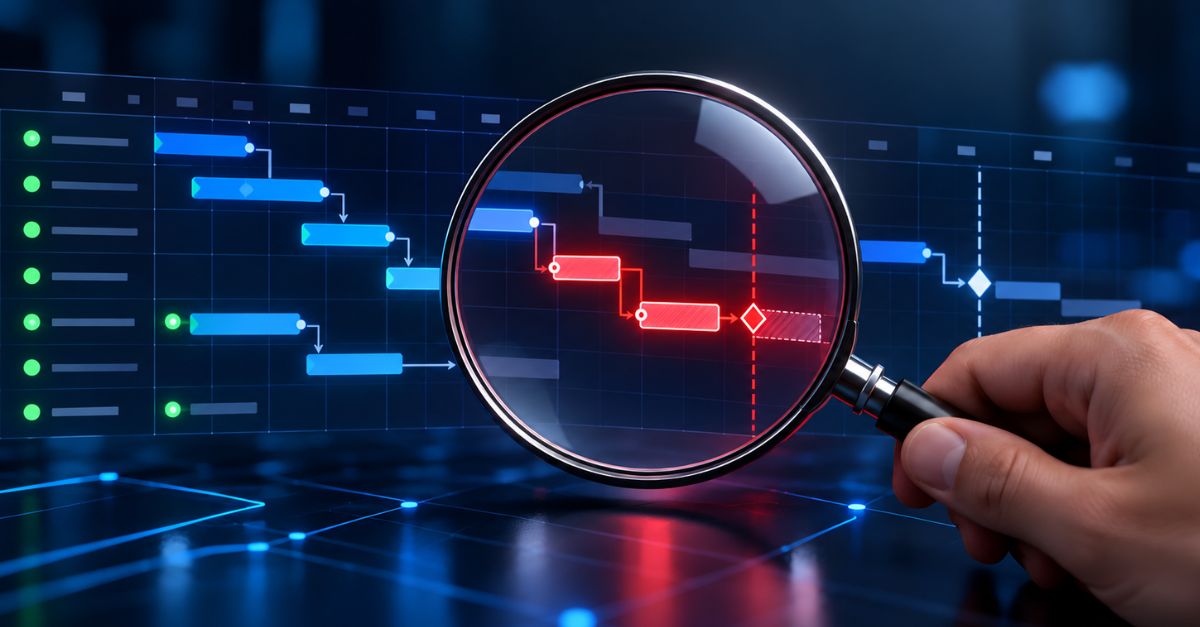
A project management system with strong control capabilities doesn't just show you that a task is late. It calculates what that task being late means for every downstream dependency, updates the delivery forecast accordingly, and surfaces the decision you need to make before the impact becomes unrecoverable.
It doesn't just show you that a resource is assigned to a project. It knows what else that resource is committed to, flags when their capacity is overallocated, and reflects that constraint in the project timeline before you find out the hard way.
It doesn't just report on risk. It detects risk from the pattern of what's happening in the project data: tasks slipping in a particular sequence, estimates consistently running long, dependencies that haven't been started that are on the critical path. And it surfaces that risk while there's still time to act.
This is the difference between a system that informs, and a system that helps you intervene. Most teams have the former. The teams that consistently deliver have the latter.
Why the Gap Matters More as Projects Get Complex
For simple projects with small teams, visibility is often enough. There aren't many dependencies. The team is small enough that informal coordination fills the gaps. A task board gets the job done.
As projects get more complex, more tasks, more people, more interdependencies, tighter timelines, the gap between visibility and control becomes a delivery risk.
Complex projects fail in predictable ways. A critical dependency gets missed because nobody had a system-level view of the critical path. A resource is over-allocated across three workstreams and can't deliver on any of them at the level needed. A project that looked healthy in last week's status update misses its deadline because the signals were there in the data but nobody had a way to read them before it was too late.
These aren't surprises, in hindsight. They're patterns. And the teams that can read those patterns in advance, and act on them, are the ones with control rather than just visibility.
What Project Control Actually Looks Like
Control doesn't mean micromanagement. It means your project system does the analytical work that humans shouldn't have to do manually.
When a task slips, the timeline updates automatically. When a resource is added or removed, the delivery forecast reflects it. When a risk pattern emerges in the data, it gets flagged before it becomes a problem. And when a decision needs to be made, the system gives you the context to make it quickly rather than requiring someone to build a new report from scratch.
The goal is not to take judgment out of project management. The goal is to give the humans doing the work the information and the lead time needed to best use their judgment. That's what separates teams that manage projects from teams that control outcomes.
Learn more about how Moovila goes beyond visibility to give teams real control over project delivery.
Project Management